ACARA Alignment: ACHEK 052, ACHEK054
Clip Length: 0:44 minutes
Year: 2026
URL: https://www.youtube.com/shorts/ZDzRbQOahBM
Economic Concepts: productivity, fiscal policy, supply, production costs
Sure the government needs to improve housing regulations to speed up market supply of housing in Australia, but the suppliers can do their bit too.
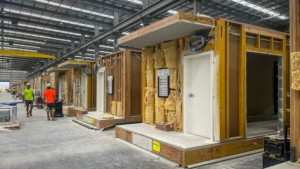
Alan Kohler interviews a concrete prefabricated apartment builder in this short. As the housing debate rages, supply remains tight compared to demand this clip can be a good way to start talking about ways suppliers can shift the supply curve by reducing production costs.
Before showing the clip ask students to list some of the fixed and variable costs of production. Record the answers on the whiteboard.
Fixed costs include: surveying, house design, office rent, insurance, equipment depreciation.
Variable costs include: raw materials (timber, brick, concrete, roofing etc.), temporary site expenses (portaloo, waste disposal, temporary fencing), fuel and machinery operational costs, casual and subcontractor labour.
Show the clip.
In the clip they discuss how prefabricated concrete apartments can be a more cost effective method of building a residence. Now ask the students which of the costs they have listed could be reduced or removed with prefabricated / modular housing?
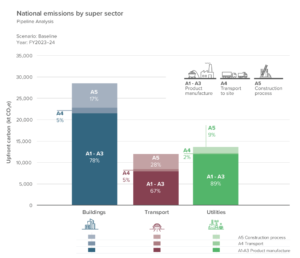
One of the negative externalities of building dwelling is the carbon emissions and use of resources. The construction of abuilding is 78% of it’s lifetime GHG emissions (see graph below, from https://www.infrastructureaustralia.gov.au/reports/embodied-carbon-projections-australian-infrastructure-and-buildings)
What if there was a solution? Engage in a discussion with students by asking:
“If new housing is bad for the environment but we don’t have enough of it do you have any suggestions for what can be done?”
One thing that might be suggested is that more people can live in a house. From 2016 t0 2021 Census data shows the number of persons per dwelling dropped by 0.03%. It doesn’t sound like much but it just over 100,000 extra dwelling we did need to build in 2021 due to lower occupancy rates. So who’s moving in with granny??